Mechanical Engineering · Dalhousie University

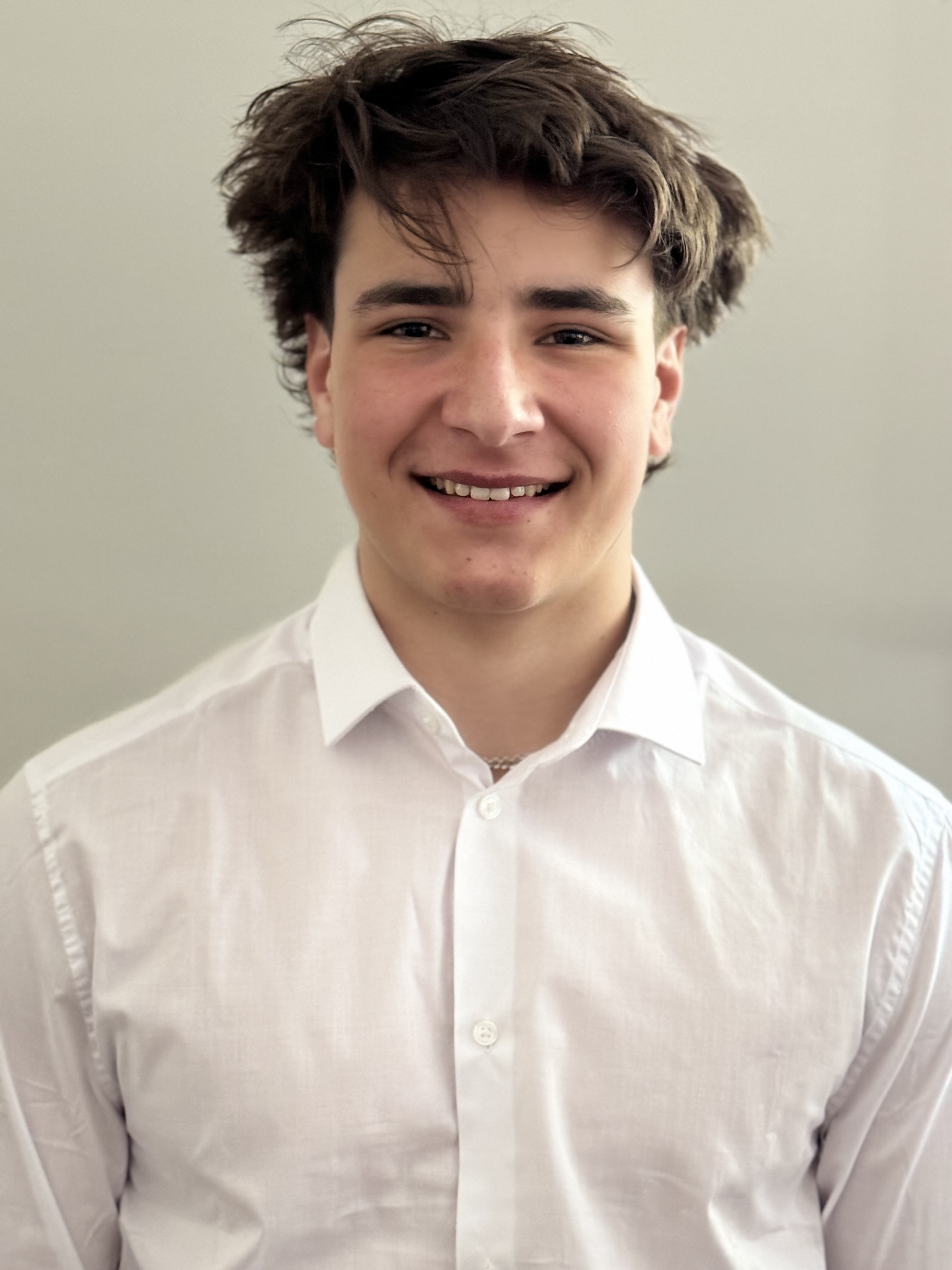
Benjamin DiBuono

Mechanical Engineering student focused on product development, automation, and motorsport-inspired design.

SolidWorks MATLAB Power BI Excel CAD Automation Product Development
Selected Work

Four case studies.

Test engineering, rapid fixture design, workflow automation, and applied AI — how each problem was framed, what I built, and what it changed. The complete 30-page portfolio is available as a PDF.

01

Compact Detail Blowers — Benchmarking to Recommendation

A custom test rig and structured dataset that turned competing products into one defensible decision.

SolidWorksTest Rig DesignGD&TData Collection

Problem / Context

Several competing mini-turbofan blowers had to be evaluated fairly to choose the best option to sell under our brand — and the conclusion had to hold up under management review.

My Contribution / Process

I designed and fabricated a custom SolidWorks test rig so each blower could be evaluated under identical conditions, planned the test process in advance, and ran multiple trials per data point, averaging results to reduce outlier influence. I produced full engineering drawing sets for both rig configurations following GD&T conventions, then condensed the dataset into a recommendation deck, pressure-testing every conclusion against the raw results.

Outcome / Impact

The recommendation was accepted by management and the selected blower advanced to the next stage of development, backed by a clear performance-and-value case.

$120K Projected annual retail sales
The assembled blower test rig: an aluminum extrusion mast holding a mini-turbofan blower above a fixed test surface
Test rig — physical build
SolidWorks wireframe drawing of the blower test rig assembly
CAD assembly
Dimensioned general assembly drawing of the test rig with GD&T callouts and mounting details
GD&T drawing set
02

Oil Drain Pan — Custom Bonding Fixture

A variable-speed adhesive fixture engineered, built, and shipped in roughly seven hours.

SolidWorksElectronics3D PrintingFabrication

Problem / Context

A manufacturer needed a way to apply adhesive evenly to an insert — requiring a compact, variable-speed device engineered around the insert geometry.

My Contribution / Process

I sourced all electrical and mechanical components, measured and modelled each part in SolidWorks, and combined them into a compact assembly built around the insert geometry. I designed and printed a minimal-footprint enclosure, soldered the wiring, and assembled and tested the finished fixture.

Outcome / Impact

The fixture was integrated into the manufacturer's production process. Thirty-six-hour inverted leak testing confirmed zero leakage, validating both the adhesive method and the fixture — roughly seven hours from initial request to shipment.

$1.2M+ Projected annual retail sales (10L + 15L)
The finished bonding fixture: a compact black 3D-printed enclosure with speed display, control knob, and start button on a cutting mat
Finished fixture — assembled & tested
SolidWorks model of the bonding fixture enclosure with speed controller
SolidWorks model
Inside the fixture enclosure: motor, terminal block wiring, and heat-set inserts
Electronics & wiring
03

Vendor Capability Intake System

An automated collection-to-insight pipeline for supplier capability data across a global team.

Power AutomatePower BIExcelProcess Automation

Problem / Context

At the AVP's request, the global product development team needed a faster way to collect, store, and query supplier capability data when scoping new product categories.

My Contribution / Process

I consulted multiple team managers and the AVP to define the required vendor fields — factory details, manufacturing materials and methods, sustainability certifications — then built a vendor-facing intake form, engineered a Power Automate flow to pipe submissions into a structured Excel database, and developed an interactive Power BI dashboard to surface supplier capabilities for cross-functional use.

Outcome / Impact

The system automated the collection-to-insight pipeline, accelerating vendor onboarding and sourcing decisions across the global PD team while saving an estimated 60 hours per week in manual effort.

~60 hrs Estimated time saved per week
The intake pipeline: a Power Automate flow feeding survey submissions into a structured vendor database table
Intake form → Power Automate flow → structured database
04

Product Development Wiki & AI Agent

A rebuilt knowledge base, a custom Copilot Studio agent trained on it, and a town-hall rollout.

Copilot StudioSharePointPrompt EngineeringDocumentation

Problem / Context

The team's central wiki was underused and hard to navigate, costing time in repeat questions and lost information — and even an improved wiki still required manual searching.

My Contribution / Process

I rebuilt the knowledge base first: authored new pages covering AI basics, 3D-printer calibration, and AI-tool guides, restructured older resources for discoverability, and edited long meeting recordings into usable segments. I then trained a custom Copilot Studio agent on the SharePoint knowledge base, released a beta to a controlled user group, and iterated through multiple design cycles to refine prompts and response accuracy. To drive adoption, I presented the system live to 83 team members at a company town hall.

Outcome / Impact

The agent was adopted across multiple workflows, giving the team faster access to shared wiki content and demonstrating measurable productivity gains from practical AI integration. The town hall generated strong engagement, with team members volunteering to contribute pages and adopt the agent in their own workflows.

83 Team members reached in one session
Ben presenting the PD Wiki and AI agent to a full room at the company town hall, with remote attendees on screen
Company town hall — live demo to 83 team members
The PD Wiki Agent interface in Copilot Studio, answering a question about types of AI with citations to wiki pages
PD Wiki Agent — cited responses
The AI Basics wiki page authored by Ben, with navigation to prompting guides and AI fundamentals
AI Basics wiki page
About

The engineer behind the work.

Benjamin DiBuono

I'm a third-year Mechanical Engineering student at Dalhousie University (BEng expected 2028) with two engineering co-ops behind me — eight months in product development and four in supply chain solutions. That work has spanned the full product lifecycle: CAD modelling, prototyping and testing, data analysis, workflow automation, and AI-driven process improvement. Some of it reached retail shelves; some of it quietly saves a global team dozens of hours every week.

I approach every problem the same way: structured, analytical, and focused on the most efficient path from problem to result. Whether that's a custom test rig, a bonding fixture built in an afternoon, or an automation pipeline, I like building practical tools that solve real problems — and backing decisions with data instead of opinion.

Long-term, I'm working toward motorsport engineering with a focus on aerodynamics — drawn to environments where precision and performance are the baseline, not the goal.

Contact

Let's build something fast.

Open to co-op opportunities, engineering conversations, and anything motorsport.